
ATTIVO
The Simple Life
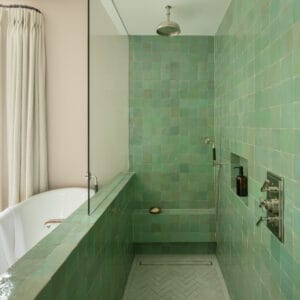
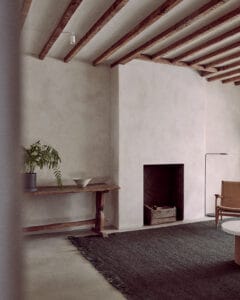
Quiet zones, clever lighting and a need for the new ‘warm’ minimalism is leading the charge for rest and relaxation and peace when designing our homes. Remember all the controversy when Boris Johnson’s Downing Street apartment was redecorated in a riot of busy floral wallpaper, fussy fabrics and ornate lampshades? The extravagant no-holds-barred aesthetic seemed out of touch, distasteful even, amid the pandemic. As industries slowed down, so did our appetite for conspicuous consumption. A few years on the pushback against design maximalism in the home endures. Architects, interior designers, and furniture makers take sustainability more seriously than ever. There’s a proper understanding of how our planet’s shrinking biodiversity impacts human health. Yes, the pendulum swings between minimalism and maximalism in the design world. Over the past century, we’ve seen mid-century bolts of bold colour, stacks of primary-hued crockery in the 1970s and, a decade later, Charles Jencks’ iconic and eccentric maximalist home Cosmic House, which last year reopened as a museum. And, as recently as 2018, designer Martin Brudnizki revamped members’ club Annabel’s in Mayfair in a smorgasbord of patterns, tassels, tulip chandeliers and, in the pink loos, gilded taps in the shape of swans. But now, there’s renewed interest in simple living; we are in the mood for quiet, elegant minimalism. “People can be scared of minimalism,” says architect Melissa White. “When I use the word my clients usually say, ‘Ooh, too stark and clinical’. But I’m interested in what I describe as warm minimalism, subtle design featuring natural materials like wood and stone that patina beautifully and which bring texture to your home and solace to the chaos of everyday life.” Tadelakt, the time-honoured lime-based Moroccan plaster, is another of the architect’s favourite materials. “It’s reminiscent of natural stone and, because it’s waterproof, a good alternative to tiles in the bathroom. In other rooms, I love to cover walls in unfired clay. And while my projects generally feature a lot of white, we are talking soft, neutral whites, not stark ones. The colour comes in so many shades.” Minimalism is also about integrating furniture and fittings into the architecture of your home, rather than adding them afterwards, as is often the case with maximalist design. “Good minimalism has an underlying rationalism. There’s a rigour in how space is planned,” says Melissa. In her projects, this often means “thoughtful bespoke storage in hardwoods such as oak, walnut, ash and birch, making joinery a design feature of your home, rather than trying to hide it away.” And she invariably specifies wood in its natural state, with as little resin as possible. “It’s an excellent way of bringing the outside inside. Which in turn makes you feel calm.” Minimalist interior designer Louisa Grey, of House of Grey, agrees. “We use nature as our inspiration to design spaces that allow your mind and body to be calm and focused. We only use products and materials that minimise the impact on the earth. Ultimately, they positively impact your wellbeing because you’re not breathing in toxins that some products emit.” Natural light is also a source of psychological comfort, notes Louisa, so the studio incorporates it as much as the garden, or a cupboard that opens into a desk during the day, but which you can fold away when work’s over.” One of Melissa’s current clients is a yoga teacher who wants a quiet zone in her busy London flat where she can do handstands. The architect says lighting will be crucial in delineating the space. “A good minimalist scheme will feature general mood and task lighting. Lighting can completely change the dynamic of a space. It’s a crucial thing to spend your money on.” As are an architect’s services. If you’ve ever been frustrated by a builder’s failure to inject your home with the calming simplicity you envisaged when you hired him, you are probably being unfair. “Architects understand spaces in ways that most people don’t,” says Melissa. “I’ve yet to do a project where the client doesn’t say, ‘I never thought of that.’ We know what all types of buildings can and cannot do. You need an architect to look at your property holistically to get the most out of your property. This is what we’re trained to do.” Although you can hire an architect by the hour, get a design concept, and then hand it over to a builder, it’s invariably better to have one on board throughout your project, whether it’s an extension to your home, a head-to-toe renovation, or a new build. That’s how you end up with truly beautiful projects such as Ditton Hill House, below. As well as coming up with the original design concept, an architect will ensure the materials used to execute it are coherent. In many instances, this is what minimalism comes down to: a select palette of materials that speak the same language. Some architects will specify furniture that speaks the vernacular, too. “People sometimes confuse minimalism with a lack of choice, but what it really means is being very thoughtful and reductive,” says architect Oliver Leech. “There’s a guiding light. You don’t specify the red, plastic worktop you love if it doesn’t work with the overall scheme. You use the same materials again and again.” Neither does minimalism equal plain, he says. “Our project Pink House is very characterful, but also very minimal,” he says. “There’s a single theme throughout – the plaster is exposed, the concrete floors are on show, the house’s timber and steel structures are there for all to see. We called it Pink House because of the pinkish hue of the gypsum plaster and Douglas fir beams.” When the practice sits down with a new client, the architect asks for words that describe how they want their home to feel. ‘Calm’ always comes up, he says. He thinks Oliver Leech Architects’ projects achieve this partly because they feature minimal ornamentation. “Their warmth and character comes from the texture of the materials we use and the way the light then plays with them.” DESIGN SHOP Twenty Twenty One Twentytwentyone.com From accessories to whole furniture systems, this is the most amazing retailer for the kind of design classics Louisa Grey mentions. Fantastic sales team, fully versed in the history of design. INTERIOR DESIGN STUDIOS Fred and Rigby (also furniture designers) fredrigbystudio.com House of Grey houseofgrey.co.uk ARCHITECT PRACTICES Melissa White Architects melissawhitearchitects.com Oliver Leech Architects oliverleech.com TADELAKT AND NATURAL WALL FINISHES Clayworks clay-works.com One + Maike oandmfinishes.com Bauwerks Lime Wash Paints bauwerkcolour.co.uk FURNITURE MAKERS AND JOINERS Sebastian Cox sebastiancox.co.uk Vialle + Co: Cabinet Makers vialleandco.com If you’d like to explore your options for financial planning, why not talk to Attivo? Our team of Chartered Financial Planners happy to help to make the process a smooth one. Call us on 01242 585444 or Clientservices@Attivo.co.uk.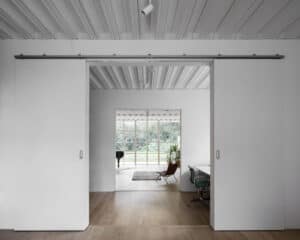
“Good minimalism has an underlying rationalism. There’s a rigour in how space is planned.”
“People confuse minimalism with a lack of choice, it really means being very thoughtful and reductive.”
Little black book of minimalism