
ATTIVO
The Gold Rush
By Nick Scott
Whisky is enjoying a stratospheric rise in popularity. So what’s driving the boom? And how can you join in the party?
Bernard Shaw called whisky ‘liquid sunshine’ – and he’ll get no quarrel from Holyrood’s economic analysts. Exports of Scotland’s national drink generate around £125 a second (£6.2bn in 2022, or around 26 per cent of all Scotland’s international goods exports). And with way more than 22 million casks currently maturing in warehouses around the country – equivalent to 12 billion bottles – those figures aren’t going to plummet any time soon.
The transformation in whisky’s fortunes is truly nothing short of miraculous. As recently as the 1980s, overproduction and declining demand created a “Whisky Loch”, as the glut was referred to. Dozens of distilleries were mothballed over that period. Around half a century on, not only is there a steady stream of new production centres opening, but many of these “ghost” or “silent” distilleries are being resuscitated.

Expressions laid to rest before such establishments went into hiatus have achieved near-mythical status amongst serious whisky buffs. Whilst the figure they ended up fetching is under wraps, casks of single malt from two Highland distilleries, Port Ellen and Brora – both of which, having closed in 1983, were subject to a £35m relaunch project announced by drinks giant Diageo in 2017 – were expected to fetch more than £1m each when they went under the hammer at Sotheby’s in summer 2022.
And how is “Uisce beatha” (Water of Life), as it’s called in old Irish, faring in what is arguably its birthplace? (Yes, whisper it north of the Mull of Galloway, but the earliest written references to fermented grain mash are found in a manuscript, the Red Book of Ossory, now kept in Kilkenny’s St Canice Cathedral). Thanks in part to innovative targeting of discerning younger drinkers, that country’s number of operational distilleries has rocketed from just four in 2010 to more than 40.

Across a much larger sea, the popularity of whiskey (note the added ‘e’ when referring to expressions made in Ireland or the US) has gone stratospheric: sales of what is traditionally America’s tipple of choice, bourbon (technically a sub- genre of whiskey, made from corn rather than barley) are projected to rocket from US$8bn in 2022 to US$15bn by the end of 2030. And single malt whiskey even eclipses bourbon – it’s the fastest-growing category in the US, with 200 different expressions now being made from more than 100 distilleries.
If you’re still not convinced that the whisk(e)y boom is a global phenomenon, consider the marketing: both Johnnie Walker Blue Label and Glenfiddich collaborated with artists – Japan-born Raku Inoue and Taiwanese-American James Jean respectively – to create elaborate bottle packaging celebrating Lunar New Year, clearly aimed at the Chinese market. See picture, right.
‘Whisky can offer both fiscal and emotional returns on investment’
These are by no means the sole, or anywhere near the most outrageous, examples of presentation bravado in the wake of the whisky boom. Highland Park 50’s bottle is encased in a cage of creeping vines handcrafted in sterling silver, with the distillery’s crest carved into a disc of Orkney sandstone in the centre. One 18-year-old launched by Chivas Regal came, at the behest of creator Dame Vivienne Westwood, swaddled in a silk Trafalgar flag with a rosette pinned to it. Emerald Isle Whiskey, by The Craft Irish Whiskey Co – which became the most expensive whiskey ever sold when someone paid more than £2.1 million for one unit of seven made, at a Sotheby’s auction in November – comes with an emerald-containing Fabergé egg, a custom watch made by the same jeweller and a couple of Cuban cigars.
Whiskey Galore
So why is whisky now holding court at the head of the table? Well, it helps that its entire milieu is dripping with romance. When a master distiller lays down some juice that will come to fruition after decades of evaporation, oxidation, concentration, filtration and colouration, they – like the medieval artisan laying a cathedral’s foundation stone – proffer a gift to future generations, knowing they will never experience the final expression of their labours.
Then there’s the evocative terminology: production lingo such as “oak ageing” (exposing liquid to timber to add rich new traits to the liquid) and – my personal favourite – “angel’s share” (the liquid portion lost to evaporation during ageing). It all smacks of artisanal endeavour and militates against the soulless tenets of commercial mass production. In other words, manna from marketing heaven. No wonder tasting notes, when it comes to fermented grain, now resemble those describing fermented grapes (expect, at any tasting event, to hear talk of ‘notes of Crème Brûlée’ and ‘long finishes punctuated with sweet citrus bursts’).
Ian Buxton, author of one of Britain’s best-selling whisky primers, 101 Whiskies to Try Before You Die, points out that the industry has been adept at harnessing this innate mystique. ‘Distillers have done a lot to inform and educate consumers – whisky is a very open and sharing place – so those consumers now are looking for authenticity, big flavours and a huge choice range,’ he says. ‘Whisky offers something for all palates and is uniquely versatile in the different serving opportunities it presents, from a bracing outdoor dram to the most sophisticated of cocktails. ’
Meanwhile, aficionado and investor Attivo client Tony Walker (pictured right at a tasting session at Ben Nevis distillery in Scotland) cites economics as a major factor behind the rise of upmarket whiskies in particular. ‘The world has become a lot richer,’ he says. ‘There has been a global boom in people aspiring to rise from lower to middle and upper classes. To show this to their peer groups, they need to be seen to be “trading up” to more expensive goods and services.’

A Journey Of Distinction
So how does the neophyte begin their whisk(e)y journey? My transition began when I first tasted the deep, smoky subtleties of an Islay single malt, eked out and sent to the thousands of journalists desperate to try it in tiny vials (a full bottle would have set me back five figures). My conversion was instant: but a long narrative had only just begun. Whisky is like watches and test cricket – the more you learn, the more you realise how little you know.
But despite the astronomical prices and esoteric vocabulary out there, don’t be intimidated. Glen Grant’s Master Distiller Dennis Malcolm – who was born on the Speyside establishment’s grounds in 1946 and has worked there since he was 15 – once told me that, while you may draw a few frowns from purists if you start tainting the nuance and complexity of a peaty 12-year-old with Coke Zero, you should feel free to add water or ice to it. ‘As the ice slowly melts and you sip away at it, you’re on a journey of discovery of aroma and taste, and you’ll eventually discover how diluted you like it yourself,’ he told me.
Your quest of discovery needn’t be confined to the home, either. At Johnnie Walker’s Princes Street flagship, immersive rooftop tastings involve locally sourced cuisine, thoughtfully crafted cocktails and views of Edinburgh Castle. Nearby in Leith, following a £500,000 refurbishment, world-renowned whisky bar The Vault has just reopened – and its 15ft-high bar is stacked with around 2,000 rare single malt Scotch whiskies.
Consider, too, distillery tours such as that offered by Macallan in Moray, Speyside. Forget any dilapidated metal barns you’ve seen in grainy photos: Macallan’s production centre – a vast grass and wildflower-covered dome, dreamt up by the architects behind London’s Leadenhall Building, packed with vertigo-inducing displays of bottles, spiral staircases, bustling production zones and slick exhibition spaces, tasting bars and a brasserie – is more like a Bond villain’s lair.
And more seasoned experts can bolster their whisky smarts by considering buying whole casks rather than bottles. The Scotch Malt Whisky Society’s 50th Anniversary Cask Club is offering, for between £4,000 and £5,500, the chance to own an entire barrel and follow its journey to the bottle. ‘If you join us for this special 10-year journey, you’re acquiring a work of art that will be aged to perfection,’ explains the Society’s Head of Whisky Creation, Euan Campbell. ‘You will see how the whisky inside the cask matures over time and be able to savour samples during the experience.’
And if you really want to broaden your whisky horizons, Buxton suggests looking beyond the British Isles and North America. ‘Consider some of the fantastic new “world” whiskies from less fashionable producing nations, such as Sweden and Finland,’ he says. ‘The world is your oyster – there are wonderful surprises to be discovered.’
Many Happy Returns!
In short, you should invest time in your whisk(e)y journey. Only time though?
The story of one man from Coventry who purchased casks of Macallan and Tobermory for £3,200 and £1,500 respectively, then 27 years later in 2021 sold them for £225,000 – a 4,600 per cent increase – has become legendary amongst those who see whisky as an asset class.
Whisky, indeed, can offer fiscal and emotional returns on investment, just as Attivo client Tony Walker has discovered. ‘I most definitely see it as a portfolio asset,’ he says, proudly showing me a spreadsheet entry: a bottle of Bunnahabhain, purchased in 2019 and sold less than four years later with an impressive 600 per cent gain. ‘I can’t think of any other asset class that gains value based on time only, except for fine wine. I’ve invested hundreds of thousands of pounds in whisky since 2015 – I currently own over 50,000 litres of pure alcohol, enough for circa 140,000 bottles – and my returns have been in the order of 15 per cent per annum after all costs. I classify it as my “moonshine pension”.’
And whisky investment is far more than just a spot of extra-curricular fun for ultra-wealthy celebs (notably rappers: Drake, Snoop Dogg, Pharrell Williams, Jay Z, Ne-Yo and Diddy are all investors in the spirit industry). After all, the malt whisky market is expected to hit a value of £5.5bn by 2031, up from £3.6bn a decade before that year, according to a report by Allied Market Research.
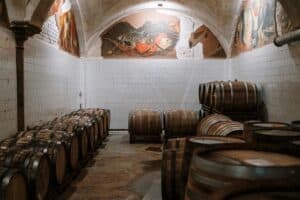
However, you’ll need to put in some serious homework, with topics such as how to use government-approved bonded facilities, insuring against theft and damage, how brokerage services function, pricing trends and ascertaining future desirability on your syllabus. And, as well as patience – whisky takes years to mature in more ways than one – you’ll need to count abstinence amongst your virtues. Whisky – unlike fellow passion investments like art and vintage cars, which can be enjoyed while they appreciate value – is a single-use asset and must remain sealed.
Whether fiscal or emotional returns – or both – are your goal, though, investing time and money in this fascinating and profoundly transformed asset will be a gift to yourself that keeps on giving.

Blend It Like Beckham
Beckham, Frank Sinatra, Winston Churchill and Queen Victoria are among history’s most famous whisky buffs – but who are the modern-day aficionados?
David Beckham
Having been the face of Haig Club scotch whisky for nine years, Becks announced his intention to drop the partnership – and pursue his own beverage line – last year. Investment opportunity seekers take note: Casamigos Tequila, co-founded by George Clooney in 2013, was sold four years later for US$1bn.
Bob Dylan
Metallica, Matthew McConaughey and Conor McGregor have also applied their smarts to whisky-making, as has Bob Dylan. The modern-day bard is the founder of Heaven’s Door Whiskey, which recently released an 18-year-old bourbon with a price tag of close to £500 a bottle.
Hillary Clinton
Necking a Crown Royal in an Indiana restaurant during her 2008 presidential campaign prompted some to credit the Former Secretary of State with bolstering the whiskey industry.
If you think any of your friends or family would benefit from a free initial conversation with a Financial Planner, please call Attivo on 01242 585444 or visit: attivo.co.uk.