
ATTIVO
Phased retirement: explained
According to the 2024 Global Benefits Attitudes Survey, nearly half of workers aged 50+ have either started a phased retirement, or are planning to do so.
But what is phased retirement, what are the benefits and drawbacks of it, and – perhaps most importantly – how can you plan for it financially, practically and emotionally? To discover the answers to all these questions, and how Attivo can support your own retirement plans, be sure to read on.
So, what exactly is phased retirement?
Phased retirement is a flexible retirement option that empowers you to retire gradually from work, as opposed to finishing with a hard stop.
For example, if you currently work a nine-to-five-hour working day over five days a week, you may decide to cut down your working hours per day, or the number of days you do in a week – or even both. Or, you could keep working full time, but reduce your responsibilities.
There’s no “right” or “wrong” way to approach phased retirement – ultimately, it’s about doing what’s best for you.
To be eligible for phased retirement (and claim your pension), however, you will need to be aged between 55 and 75. What’s more, the minimum pension age will be increasing from 55 to 57 as of 6 April 2028, so it’s important to bear this in mind.
What are the benefits of phased retirement?
1. You’ll still be earning whilst having access to your pension
Phased retirement is a great way to supplement your retirement income, as you’ll be able to start accessing your pension fund whilst still getting paid by your employer for the hours/days you work. It’s worth noting though that you’ll be taxed if the total of both goes over the £12,570 per-year Personal Allowance.
2. The pension you don’t use will continue to grow
Leading on from the above, the pension amount you leave invested will continue to grow. It’s always important to remember, however, that investments can go down as well as up. Additionally, as of April 2027, any unused pensions will be drawn into scope for Inheritance Tax. A qualified financial planner can support you in making the best possible decision for you around this.
3. You can potentially increase your State Pension
The State Pension is the regular income you’ll receive from the Government when you retire (you can find out when you’ll personally be eligible to receive your State Pension here, though currently this is at age 67).
By deciding to pursue a phased retirement, you can choose to delay your State Pension. For every year you delay, your weekly payments increase by just under 5.8% (or for every five weeks you delay, you can increase your total State Pension by 1%).
4. It’s a helpful indicator for how full-time retirement spending may look
In our Guide to Retirement, we explore the three main “phases” of retirement: the big event, the early stages, and the new normal.
Phased retirement skips (or defers) the “big event,” and puts you straight into the early stages. This phase often carries the greatest financial risks, such as overspending.
Phased retirement can therefore be a good practice run of this early stage as you begin to map out your spending during non-working days. You can then use this knowledge to work out how much money you might need for full-time retirement.
It’s less of a “shock to the system.”
For many people, work is not simply about earning money; it’s about making a contribution to society whilst enjoying a regular routine and fostering relationships with colleagues. For some though, it can be a bit of a shock.
Phased retirement enables you to maintain your working lifestyle and relationships whilst also getting a taster for what full-time retirement may look like, and gradually building a new routine to replace the work one, rather than starting from scratch.
What does your retirement income look like?
Use our free calculator for an estimation of your future pension.
The Attivo pension calculator provides an illustrative guide only and should not be relied upon as a recommendation or personalised assessment. If you are unsure whether your retirement plans are suitable for your needs, you should seek regulated financial advice.
What are the potential drawbacks of phased retirement?
1. Your overall income may be lower
If you choose to reduce your hours or days at work, your salary will also decrease. As mentioned above, there is a possibility of topping this up by accessing some of your pension, but this still may not add up to the income you’re used to having.
2. You may lose out on employee benefits
This will depend on the company you work for and how they manage their employee benefits scheme, but if you reduce your hours or responsibilities, your employer may decide to cut back on the benefits you currently receive, such as death in service or private medical insurance. Therefore, before you make any decisions, be sure to review your company’s employee benefits policy.
3. You might miss out on opportunities
Being able to support yourself financially in retirement is important, and phased retirement can certainly help with that.
However, if you begin your phased retirement later, instead of retiring full time, you may potentially lose out on time that you may not be able to get back. For example, you may wish to go travelling, which early retirement is a good time for as you’re less likely to be inhibited by health problems, and can therefore enjoy it to the full.
The same goes for any of the other ways you would like to spend your retirement, whether it’s spending more time with friends and family, volunteering, or taking on a hobby that you didn’t have time for before.
How much money do you actually need for retirement?
Our expert written article deep-dives into Pensions UK’s recently updated Retirement Living Standards, and five ways to help you achieve “enough” money for your retirement.
In short, if you decide phased retirement is the right option for you, here’s what you can do to prepare:
- Work out how much money you’ll need.
- Check how reduced working hours will affect your pay and benefits.
- Review your pension options and understand the potential tax impact.
- Build out your retirement budget.
- Decide how you’ll spend your newfound freedom.
We’d also recommend…
Getting the support of a Lifestyle Financial Planner.
With their knowledge, experience and expertise, a Lifestyle Financial Planner can help you look at the bigger picture, bringing together your income, pensions, tax position and long-term goals. They can also help you decide whether phased retirement is financially sustainable, how much you may be able to withdraw, and how your plans could adapt if your circumstances change.
Looking for more retirement planning insights?
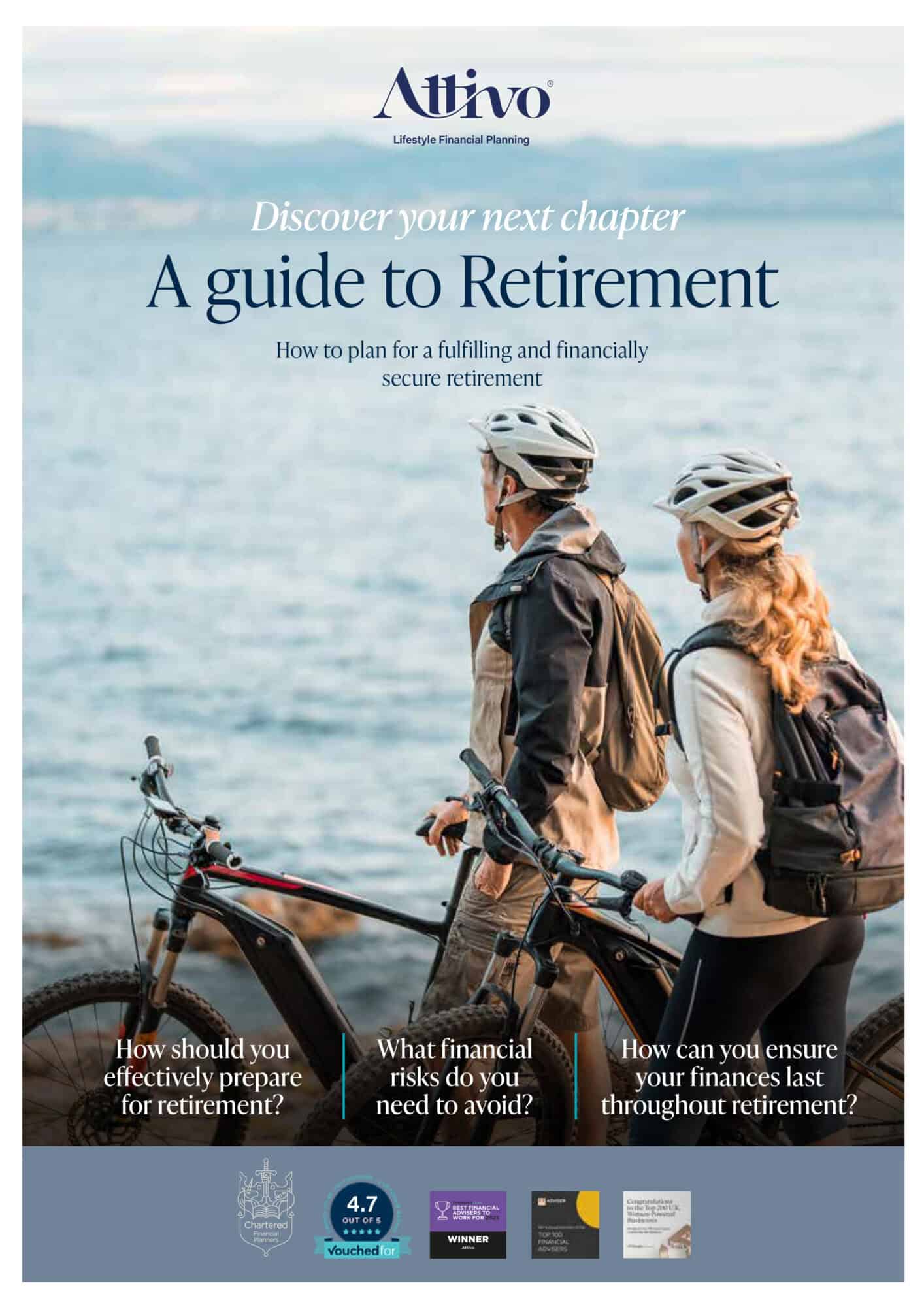
Our Guide to Retirement explores the different stages of retirement and the considerations you should make at each stage, as well as the impact of cash flow modelling, spending rules, investments, and more.
This guide is for informational purposes only and should not be construed as financial advice or a recommendation. Investments may fall as well as rise and you might get back less than the amount originally invested.
We’re here to help.
Whether you’re considering phased or full-time retirement, our Lifestyle Financial Planners at Attivo are here and ready to support you. As an independent financial planning firm, we aren’t tied to specific products and services, which means we can create financial plans that are completely bespoke to your individual needs, and that we can adapt as your life changes.
If this is something you’d be interested in exploring further, be sure to arrange a retirement consultation with us. It’s free, a great opportunity to see how we could support you, and there’s no obligation to use our services afterwards.
Sources:
HM Revenue & Customs (2026) Income Tax rates and Personal Allowances. Available at: https://www.gov.uk/income-tax-rates (Accessed: 13 August 2026).
MoneyHelper (no date) Taking your pension. Available at: https://www.moneyhelper.org.uk/en/pensions-and-retirement/taking-your-pension (Accessed: 13 August 2026).
MoneyHelper (no date) Pension drawdown. Available at: https://www.moneyhelper.org.uk/en/pensions-and-retirement/taking-your-pension/pension-drawdown (Accessed: 13 August 2026).
Pensions UK (2025) Retirement Living Standards. Available at: https://www.retirementlivingstandards.org.uk/ (Accessed: 13 August 2026).
UK Government (no date) Defer your State Pension. Available at: https://www.gov.uk/deferring-state-pension (Accessed: 13 August 2026).
UK Government (no date) State Pension age timetable. Available at: https://www.gov.uk/government/publications/state-pension-age-timetable/state-pension-age-timetable (Accessed: 13 August 2026).
Willis Towers Watson (2024) 2024 Global Benefits Attitudes Survey. Available at: https://www.wtwco.com/en-gb/insights/2024/06/2024-global-benefits-attitudes-survey (Accessed: 13 August 2026).
Important information: This article is for general information only and does not constitute personal financial advice or a recommendation. Pension and investment values can go down as well as up, and you may get back less than you originally invested. A pension is a long-term investment, and your eventual income may depend on factors including fund performance, charges, tax legislation and how much you withdraw.
Retirement income options such as drawdown can offer flexibility, but income is not guaranteed and taking withdrawals may reduce the value of your pension fund and affect the level of income available in the future. Tax treatment depends on individual circumstances and may be subject to change. If you’re unsure whether phased retirement is right for you, please seek regulated financial advice.
We offer a free initial consultation to discuss your goals and next steps. If you decide to go ahead with advice, charges may apply – these will be explained before you commit.