
ATTIVO
Jason Fox interview: Don’t Stop Me Now!
Lebby Eyres
Stints in Afghanistan, a pan-Atlantic rowing challenge, canoeing the length of the Yukon River – Jason Fox of TV’s SAS: Who Dares Wins tells Attivo Life Magazine about a life filled with extreme experiences.
The latest season of Channel 4’s SAS: Who Dares Wins is keeping us entertained, with the 16 celebrity contestants put through their paces in the North Vietnam jungle. One of the tough-talking instructors on show, Jason Fox, has had a life filled with non-stop adventure. He tells Attivo Life Magazine how, at the tender age of 16, he joined the Royal Marines before being selected for the Special Boat Service almost a decade later. After a difficult period when he left the military in 2012, he landed a job as a member of the no-nonsense Directing Staff on the show SAS: Who Dares Wins, which first aired in 2015.

The rest is TV history. Jason says, “When we made that first season, I had no idea what was going to happen. I thought it was going to be one of those things that went on telly, resonated with a small community, and then faded into obscurity. But it hasn’t so far.”
Now Jason, 46, has become a household name, renowned for putting not only civilians through their paces in some of the most unforgiving locations on the planet, but celebrities too. He and his fellow ex-Special Forces co-presenters have a wider purpose than mere entertainment: they aim to show how men and women can discover their inner resilience and overcome the hurdles life places in their way.
Jason has certainly overcome a few himself: PTSD, suicidal thoughts, heavy drinking – not to mention the time he spent in the Special Forces thinking he might lose his life at any moment. In late January 2023, Jason embarks on a tour, Life at the Limit, to talk about his experiences on the frontline and his mental health battles.
His is not a tale of joining the Marines to escape a life of hardship. Growing up in Luton, he had a normal upbringing but was “easily influenced”. He says, “I was absolutely rubbish at school and I knew I was going to get myself into trouble, and somehow at the age of 16, subconsciously, I knew I needed to get out of that situation.”
His father had been in the Royal Marines, and Jason had a natural love of the outdoors and following in his footsteps was an obvious choice. Nine years after joining the Marines, he came to his second crossroads. “I enjoyed being a soldier, rolling around in the mud, the tactics and all that stuff, and I’d travelled all over the world. I joined in the early 90s and that period was when Northern Ireland had started to downscale and I didn’t really see any operational combat. I was getting frustrated with that and also I didn’t embrace the pomp and ceremony that came with conventional life in the military.
“I felt like I’d lost my military mojo”
“I was getting bored. I needed to challenge myself so I put in for selection for Special Forces, just as 9/11 happened.”
He says, “Almost immediately, I was catapulted out into the Middle East.” What was his most dangerous mission? “All of them. To put it into perspective, even when you were back at what you think is a reasonably safe location, where you’ve got your bed and a couple of luxuries, we were often rocket attacked every night by someone who wasn’t happy with us being there. There were a lot of close calls where we were in sticky situations”. Despite the risks, he says that decade was “awesome”. He says, “I loved the jobs we did and the lads I was with.” Inevitably, being able to cope with those life-or-death situations meant developing a certain skillset. One key element, he says, “is trust in yourself and everyone around you.” But it’s also about “living in the now”.
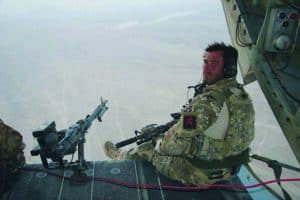
However, in his mid-thirties, Jason faced another hurdle that would completely change the life he’d known for two decades. After one particularly tough tour, Jason struggled with his mental health and started to dread the thought of going back into action again. He was eventually diagnosed with PTSD.
“I’d gone on a tour to Afghanistan, and the tempo of operations was unbelievable. In our first mission on the ground, someone in the squadron got killed, and then we lost 25 per cent of our manpower to life-changing injuries. It was stressful. I came back from that tour and I felt slightly different. Life at home was difficult. I’d split up from my missus, we’d had a kid. I was in a different place, but I didn’t know it at the time.
“Fast forward almost a year and I’m on pre-deployment getting ready to go on another tour – and it’s exciting, stuff that you join up to do, and I was having to dig deep to motivate myself and the people I was responsible for. I felt like I’d lost my military mojo and it was frustrating because I loved the job.
“Reluctantly, under the radar, I saw the clinical psychologist on the base and I said, ‘Look, don’t tell anyone’ and I made sure I snuck in without anyone seeing me. I was expecting to be whispered a few words and to go back to being normal again but it just wasn’t to be. After a few months, I was told ‘You’re going to have to leave the military because of the impact your mental health has had on you’. I didn’t want to leave, I wanted to get fixed, but I agreed to it. I left on April 5 2012.
“The funny thing is you leave, and you think things are going to be so much better, that it will be a weight off your shoulders but I felt horrendous. I’d lost my sense of identity and belonging. The new relationship I was in fell apart and I can remember standing on top of a cliff and contemplating throwing myself off. At that point, I realised I had to do something drastic, something different to change everything that was going on in my life.”
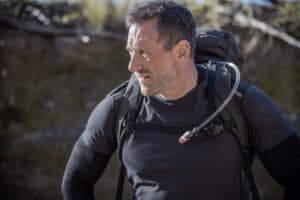
Over the next couple of years, he had to relearn that all-important military lesson again: don’t be fazed by things not working out. Without a permanent base, he was sofa-surfing and trying different jobs. Then fate intervened, and his life changed in a way that he could never have expected. Jason explains, “A mate had put me forward for a job working on the crew of a documentary on a desert island just off Madagascar. It was amazing and I had loads of fun. When we came back, one of the team was in a meeting at Channel 4 proposing SAS: Who Dares Wins, and they said, ‘Yes, we’ll make it, but where the hell are you going to find these ex-Special Forces guys?’ At that point someone said, ‘You should try this guy Foxy.’ I got a phone call basically asking me if I wanted to be on TV. I wasn’t too sure, but when I realised I had bills to pay I got involved!”
For those of you not familiar with the show, the civilian version sees 20 male and female recruits push themselves to extremes in inhospitable locations around the world – as well as being subjected to interrogations from Foxy and his fellow Directing Staff. Despite the name, there are no “winners” as such – contestants either pass or fail the selection process. The first celebrity version took place in 2019 and the current show includes MP and former Health and Social Care secretary Matt Hancock as well as former footballer Jermaine Pennant and tv presenter Melinda Messenger.
Jason loves watching his recruits on the show battle their demons and come out the other side. “It’s awesome, an amazing thing to see. Some might not be suited to it but there are other contestants whom you don’t even notice and they surprise you. You spend half the time on the show trying to unlock potential, by putting them through utter hell!”
Footballer Wayne Bridge and reality TV star Ferne McCann are celebrities that stand out to him. “Wayne was a great transformation. He had a lot of self-doubts and became really strong. Ferne was so resilient; she was like a scientific anomaly. She shouldn’t have been there [at the end] but she made sure she was.”
When the show started in 2015, it was for men only. In 2019, women joined the series. “It was a good thing. We’re all just people. We’ve had them all and don’t make it easy for anyone.”
Being on SAS: Who Dares Wins has enabled Jason to keep fulfilling his own personal desire for adventure and experiencing the extremes our planet has to offer. But that doesn’t mean he wants to spend his downtime sitting on the sofa. He tells Attivo, “The show is a tough stint of five or six weeks. I’m working hard and I love it, but I like to take on adventures of my own with other friends,” he says.
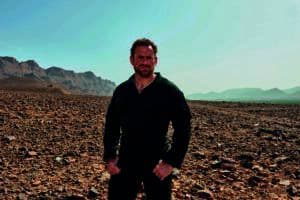
Which country has made the biggest impression on him? “Alaska is unbelievable. But I’m still fascinated by Afghanistan, the terrain and the people.”
In 2016, Jason rowed across the Atlantic from mainland Europe to South America. In 2019 he canoed the length of the Yukon River with a friend. While the pandemic and a broken leg have put paid to recent plans, he’s got his eye on 2024. “I’m not going to stop anytime soon.”
Jason Fox Life At The Limit tours across the UK from January 2024. For dates and tickets, visit Ents24.com.
Prepare for your next phase of life
If you’d like to bring your vision for the future to life, why not talk to Attivo about our unique Lifestyle Financial Planning and how we can help you with the next stage. Click here to contact us.