
ATTIVO
A voyage into the unknown
Lysanne Currie
Travel broadens the mind, but what if your next voyage of discovery isn’t just about new sights and sounds? These enthralling getaways are designed to stretch your skillset, flex your physique and help you learn something new about yourself.
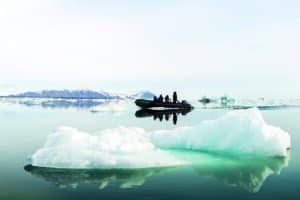
Discover your vision: snapping Svalbard
Hone your photography skills while discovering Europe’s unspoilt wilderness.This epic but intimate safari into the Arctic Circle includes a masterclass from top photographers to help you open up, not shutter, your vision…
Splash! A pod of minkes thrashes around with beluga whales in a manic feeding frenzy in the icy Barents Sea. Snap! A walrus lounging on a floe looks directly at your telephoto lens. Click! Your camera whirrs as the King of the Arctic himself, trailed by his polar bear cub offspring, lumbers into view, just metres away from your Nikon.
The Arctic archipelago of Svalbard is Europe’s last unspoilt wilderness, home to more polar bears (3,000) than people (2,600). Lying halfway between Norway and the North Pole, it’s a Narnia-like dreamland where Arctic foxes, walruses, seals, whales and puffins prowl or swim alongside imposing snowy mountains, endless ice fields and portentous icebergs.
“If you’re visiting this remote outpost, you’ll want to capture its glacial beauty for posterity – and return with the best images that a trip of this magnitude deserves.”
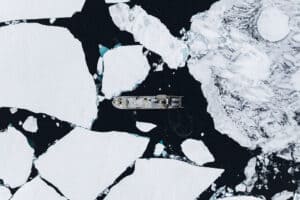
Natural World Safaris aims to ‘put you in the right place at the right time to maximise your wildlife encounters’. They offer small safaris that combine epic wildlife with specialist experts, from tracking snow leopards in the Himalayas to staring into lemurs’ spooky eyes in Madagascar. Their Svalbard Polar Bear Explorer expedition is no exception, pairing guests eager to see rarely glimpsed Arctic wildlife with top photographers.
‘Our guests don’t just see majestic creatures in the wild but also learn about them and their environments from experts such as geologists, conservationists or photographers,’ says Founder/CEO Will Bolsover. ‘Our Svalbard trip is an educative experience, with photographers telling you how to get a particular shot, for example.’
While these photographers are on hand to discuss the merits of a 35mm versus 400mm lens, they can also give tips on the fieldcraft of sneaking up on seals or where to point that telephoto zoom lens at a camera-shy Arctic fox. And who knows? Your prized photo might be worth something. In 2018, famed wildlife photographer David Yarrow (who occasionally accompanies Natural World Safaris expeditions as an expert) sold one of his shots of a polar bear in Svalbard (78 Degrees North) at Sotheby’s for £81,250.
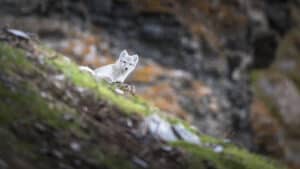
The intimate nature of Natural World Safaris’ expeditions – there’s a maximum of 12 guests and crew on the Svalbard Polar Bear Explorer expeditions – means guests have more opportunity to take the perfect shot. Meanwhile, the expedition also travels along the coastline in small Zodiac boats, squeezing into tight fjords and coves so that guests can observe colonies of walruses and seabirds up close.
‘People on our Svalbard safari describe it as a transformative experience,’ says Bolsover. ‘Everyone sees things differently, which fascinates me. Clients return home with a refreshed mindset, thinking about things differently and being slightly “challenged” by what they’ve seen. In fact, it’d be pretty hard not to get emotional about it.’
Natural World Safaris’ 10-day Svalbard Polar Bear Explorer expedition runs from April-August, priced from £8,095 per person. naturalworldsafaris.com.
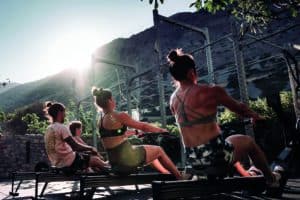
Discover your inner strength: Working out in Madeira
The more we age, the more we can benefit from weight training. If you’ve never lifted a kettlebell in your life, a fitness retreat on the magical island of Madeira gives the perfect excuse to get started…
At most wellness retreats, the emphasis is on ‘unwinding’ in the purest, floppiest sense of the word: being pampered like a prince or princess in sybaritic spas, cerebrum-decompressing digital detoxes, lolling on a lounger with a lychee smoothie on a Bali beach. There aren’t many health getaways where the USP is about getting ‘ripped’, bulking up and giving those tendons a good old workout.
Casas da Levada, a farm estate on the Portuguese island of Madeira, has a new ‘Easter Adventure’ package, including daily gym sessions giving people who have never lifted a dumbbell in their lives the chance to discover resistance training for the first time. When guests aren’t pumping iron, there’s plenty to get ‘pumped’ about on the rest of the island: black-sanded beaches, showstopping sunsets over the Atlantic Ocean, slithering down city streets in a wicker toboggan.
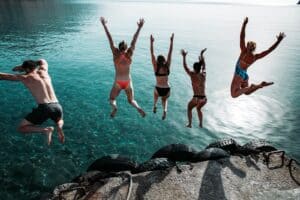
The strengthening activity offered at Casas da Levada isn’t about getting a toned torso to rival local hero Cristiano Ronaldo (there’s a huge statue of the footballer in the capital Funchal; even the airport is named after him). Instead, it’s all part of growing awareness about the health benefits of weight training, particularly for those of an older age.
As our bones lose density, the best way to protect them is by holding onto our muscle mass. Lifting weights is linked to a reduced risk of premature death; one recent study of older people (the average age was 71) by the US National Cancer Institute found those who did regular weightlifting had a 14 per cent lower ‘all-cause mortality risk’. Other studies have shown that lifting weights can lower blood pressure, reduce cholesterol and improve circulation, it also makes us more injury-resistant (and less prone to nasty tumbles) and helps stave off conditions such as osteoporosis.
“When guests aren’t pumping iron, there’s plenty to get ‘pumped’ about on the rest of the island: black-sanded beaches, showstopping sunsets over the Atlantic Ocean, slithering down city streets in a wicker toboggan.”
Casas da Levada is the perfect place to soothe those post-workout muscles, whether it’s stretching them in the villa’s yoga classes, helping them heal with deep-tissue massages, or soaking them in the estate’s jade-tinted infinity pool.
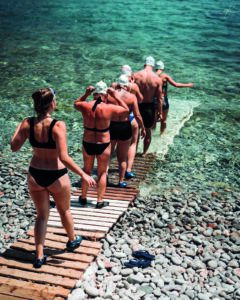
The Easter Adventure package includes free volcanic treks up Madeira’s 1,862m Pico Ruivo peak, saltwater swims in Seixal’s lava tidal pools, hiking Cabo Girão’s craggy sea cliffs (Europe’s highest promontory) or paddleboarding lessons in the Atlantic Ocean.
Back at the estate, there’s delicious organic food and a suitably protein-heavy diet (Casas da Levada is a farm estate with organic gardens).
This is no draconian bootcamp though: there are plenty of opportunities to sample the island’s eponymous fortified wine or boozy ‘nikita’ milkshakes (ice cream with white wine, beer and pineapple – yes, really) at the estate’s Hobbit Bar, plus devour local specialities such as seafood stew, milho frito (fried cornmeal) and bolo de mel (honey cake). After all, it all counts as protein, right?
Casas da Levada’s six-day ‘Easter Adventure’ package runs from 16-21 April 2024 with prices starting at £2,045pp for a Classic Room based on double occupancy. casasdalevada.com.
Discover emotional health: Through equine therapy
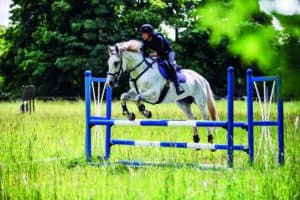
In a post-lockdown world, working with horses can offer mental and physical wellness, as guests at Lucknam Park in Wiltshire can discover through a process known as equine therapy
First published in 1956, Edwin Muir’s The Horses is among the most celebrated and moving poems ever rendered in English. Set in a post-apocalyptic world, the poem depicts a sad and barren land, devastated by some kind of catastrophic event. However, amidst this decay, something strange and magical suddenly appears on the horizon: a herd of horses, majestic and powerful, their hooves thundering down the road. These magnificent beasts, untainted by the destructive capabilities of human civilisation, symbolise a return to nature and a sense of hope.
And it’s a work that deeply resonates with a unique, experiential therapy that’s gained considerable traction in recent years. Referred to as equine therapy, equine-assisted therapy, or horse therapy, the approach, aimed at fostering emotional, psychological and physical healing, entails interactions with horses, who, with their remarkable sensitivity and intuition, possess the ability to perceive human emotions and nonverbal signals. As such, it makes them exceptional allies in therapy, as they can mirror and react to a person’s emotional state, supplying swift and invaluable insights.
While equine-assisted psychotherapy officially emerged in the 1990s, horses have been used for therapeutic purposes for centuries. Notably, the ancient Greeks employed them to aid the incurably ill. During the 17th century, horse riding was also recommended for everything from gout to neurological disorders and low mood. Meanwhile, the modern concept of hippotherapy (physical and psychological therapy with horses) emerged in the 1960s in Germany, Austria and Switzerland.
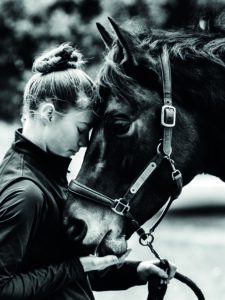
Equine therapy sessions, whether individual or in a group, are typically guided by trained therapists or counsellors, often in conjunction with experienced horse handlers. And while horse therapy generally supplements traditional therapy rather than replaces it, real breakthroughs often occur within these interactions, from grooming to riding. Participants, who may be contending with mental health issues such as anxiety, depression or addiction, are encouraged to forge a genuine bond with the horses, cultivating trust, establishing rapport, and refining communication – akin to real-life human relationships.
The animals’ renowned aptitude for detecting and responding to emotions becomes a catalyst, helping participants express feelings that might otherwise prove too challenging to verbalise or bolster their emotional self-regulation, gently forging a path toward wellness.
“While horse therapy generally supplements traditional therapy rather than replaces it, real breakthroughs often occur within these interactions.”
It’s a process that Dawn Cameron is tremendously experienced in, having been the Equestrian Centre Manager at Lucknam Park in Wiltshire for more than 20 years. The luxurious Georgian country house hotel and spa offers top-tier dining, relaxation and luxurious country living across its 500 acres – but central to its appeal is the Equine Connect programme, a series of two-hour groundwork sessions led by British Horse Society instructor, horse breeder and instructor Cameron, whose 35 horses include Patch, a beloved retiree with a cheeky character and Smokey, a gentle teacher of very young riders.
‘Guests can learn interpersonal skills, teamwork and a better understanding of reading body language,’ says Dawn. ‘It brings a great sense of inner calm and a connection while enabling people to understand their own emotions and personality types. Whilst being very good for you both mentally and physically, horse riding offers a form of escape from the stresses and worries of day-to-day life.’
Equine Connect sessions cost £195pp per session with a two-person minimum. lucknampark.co.uk.
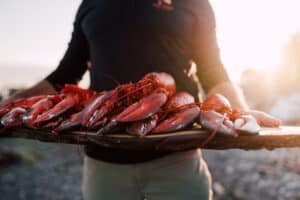
Discover your inner foodie: On the Canadian coast
‘Cramming’ with a caviar connoisseur will not only tantalise your taste buds but, thanks to his scientific background, cultivate your cranium…Attivo Life Magazine’s Rachel Roberts describes her own voyage of discovery in New Brunswick.
‘I adore all of travel’s soul-replenishing benefits. A change of perspective, meeting fascinating people from diverse cultures and soaking up the otherness of a new corner of the globe is definitely at the top of my list. I’ll throw myself wholeheartedly into the experience… with one slightly embarrassing disclaimer. An adventurous eater I am not.
Accepting the press trip invite to New Brunswick, with its strong focus on the smorgasbord of incredible culinary experiences the Canadian Maritime province offers is definitely pushing me out of my foodie comfort zone.
So far, we’ve made our own lobster ravioli from scratch, roasted coffee beans on the banks of the Nashwaak River that flows through the Eastern Seaboard province’s capital of Fredericton, and met the many inspiring chefs, baristas and winemakers who are passionate about carving out New Brunswick’s place on the culinary world map (see box out). And I’ve loved every minute.
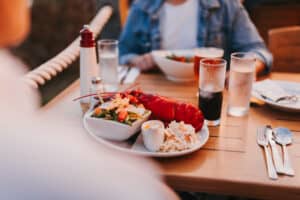
But now we’re sitting in the grand living room of our genial host Cornel Ceapa’s home in St John, New Brunswick, about to do ‘caviar bumps’. As a caviar virgin (and the aforementioned disclaimer), I’m not as excited as the rest of my road-trip companions – specialist food writers – to tuck into the delicacy, which are the eggs or roe harvested from sturgeon. To be honest, I’m a tad apprehensive. What if I don’t like it?
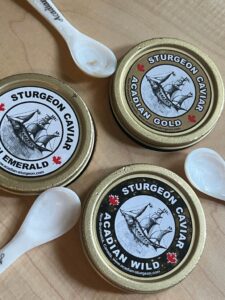
I’m feeling the pressure more because, as the founder of the family business, Acadian Sturgeon and Caviar Inc, Cornel, an ex-scientist from Romania-turned-caviar-producer has an irresistible passion – and incredible knowledge – about the delicacy. And while Cornel’s social media handle, @KingofCaviar, might suggest a tongue-in-cheek attitude, it belies the huge leap of faith he took to get this far after starting the company in 2005.
Caviar production is notoriously complex – hence the eye-watering cost (the most expensive, beluga, can run to £10,000 per kg) – and it can take around 10 years for sturgeon to grow to a harvestable size, ready for caviar production. So, after giving myself a good talking to, I plunge right in. We try three different varieties, Acadian Wild, Gold and Green, all extracted from one of the rarest sturgeon species, the shortnose, which is native to the Saint John River.
There’s something pleasingly ritualistic around the etiquette of caviar tasting. Cornel places small ‘bumps’ of the jewel-coloured eggs on the edge of each of our curled hands, which are positioned as if clutching an ice cream cone (so you can slightly tilt your hand to see the caviar reflected on the skin).
He then tells us to hold it on our tongues to feel the eggs before slowly crushing them to let the flavour develop. I gingerly follow his instruction, and then the taste hits…a rollercoaster of intense concentrated sea saltiness before a swoop of buttery richness – the hallmark of the highest-grade caviar –takes me by surprise.
“Always do the things you fear the most. Courage is an acquired taste, like caviar.”
While our taste buds float back down to earth, Cornel shares some of caviar tasting’s golden rules, saying, “caviar is an experience. It’s not an acquired taste. It’s an educated one.” For example, he used a lovely mother-of-pearl spoon because it doesn’t detract from the taste: metal interferes with caviar’s delicate flavour profiles. And champagne, vodka and white wine make the perfect companions and palate cleansers for caviar.
We’re soon lining up more ‘caviar bumps’ to test these rules, before we say goodbye. Afterwards, I Google ‘caviar’ and a quote from theAmerican essayist Erica Jong pops up: “Always do the things you fear the most. Courage is an acquired taste, like caviar. ” Although Cornel might have something to say about the last part, the sentiment certainly chimes with me.’
Rachel was a guest of Atlantic Canada. atlanticcanadaholiday.co.uk.
Three must-try delights
BRIX EXPERIENCE, MONCTON
Cocktail-making classes in a decadent bar and culinary classes, including pasta-making. brixexperience.ca
SECOND NATURE OUTDOORS, FREDERICTON
Paddleboard along the Saint John river and roast your own coffee beans on its banks. secondnatureoutdoors.com
MAGNETIC HILL WINERY, MONCTON
Try their famous fruit wines, from strawberry to rhubarb varieties. magnetichillwinery.com
Prepare for your next phase of life
If you’d like to bring your vision for the future to life, why not talk to Attivo about our unique Lifestyle Financial Planning and how we can help you with the next stage. Click here to contact us.