
ATTIVO
Protecting the planet: the future is circular
It’s time to move on from the ‘take-make-dispose’ philosophy and embrace all that the emerging circular economy has to offer. Environmental journalist, broadcaster and author Anna Turns shares her hope for the future and the products riding the crest of change.
When we work together, that ripple effect is amplified
Anna says: “When I need a dose of vitamin sea, I grab my wetsuit and swim. But I’m fully aware that neoprene is one of the most toxic materials to produce, and once riddled with holes, will eventually end up in landfill or be incinerated. Luckily, Finisterre recently launched a closed-loop recycling scheme for used wetsuits, giving old neoprene a brand new lease of life as ocean-based accessories.
Environmental journalist, broadcaster and author Anna Turns
“And even better, Patagonia now makes neoprene-free wetsuits with Yulex, a sustainably-certified plant-based rubber. Solutions like these give me hope. It’s easy to forget that resources on our precious planet are finite. They always have been and always will be.
“Yet our society has built an economy based on the myth of never-ending growth. Waste falls by the wayside while overconsumption fuels both chemical pollution and the climate crisis. But there’s another innovative and much more sustainable approach that begins with the simplest of forms – a circle.”

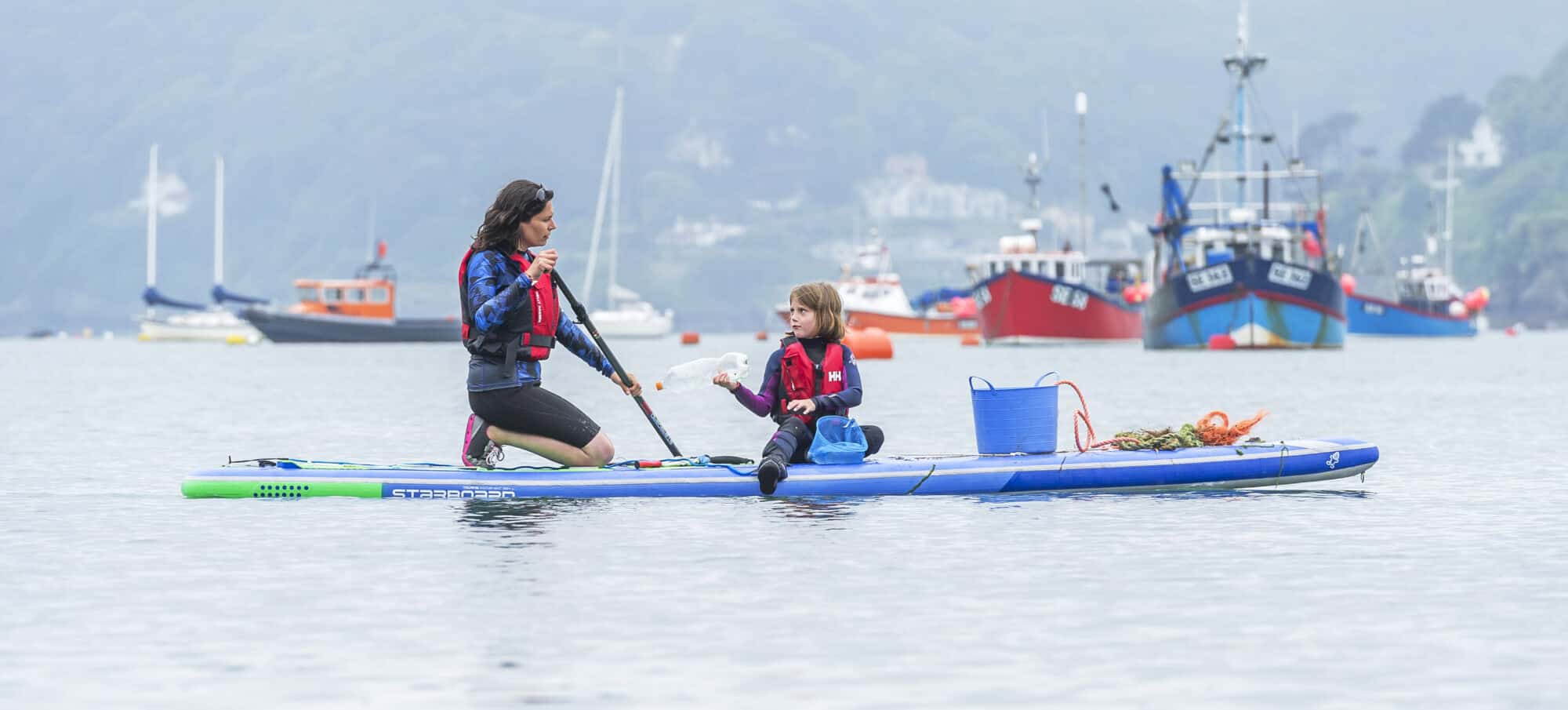
Planet and profit – it is achievable
“Moving our supply chains, businesses, systems and behaviours away from a linear model based on the ‘take-make-dispose’ philosophy to a more circular one revolves around one fundamental principle – designing out waste. That begins at the drawing board and some pioneering companies are closing the loop by considering every by-product and ounce of energy as inherently valuable.
“As the Ellen MacArthur Foundation, a charity dedicated to driving our transition to a more circular economy, states, this approach can drastically cut carbon emissions by 2050 across so many industries, from the production of materials like cement to food production. By streamlining whole systems, we can build resilience and regenerate nature in a financially viable way. I firmly believe that this could be a radical win-win-win for people, the planet and profit if we act now.”
Everything we do has an impact – and it can be a positive one
“The cogs are already moving. The University of Exeter is leading the UK’s new circular economy hub that will show how this can be done at speed and scale. The UK economy consumes over one billion tonnes of materials every year, or around 17 tonnes per person, which not only contributes to unnecessary waste and environmental damage but results in a vast amount of carbon emissions.
“I’m excited by the growth of the sharing economy – everything from community-based repair cafés to online rental platforms. Brands like MUD Jeans are embedding the leasing ethos into their business model. Most importantly, collective action is the way forward – yes, everything we do as individuals has an impact, and that can be a positive one.
“When we work together, that ripple effect is amplified. For me, any behaviour change feels so much more achievable when I find my tribe and connect with others on the same mission.
“Ultimately, with every eco-conscious decision to either NOT buy something or invest in a purpose-driven brand that’s challenging the status quo, we’re moving one step closer to creating a truly circular economy that will make the world go round.
“Most importantly, collective action is the way forward – yes, everything we do as individuals has an impact, and that can be a positive one. When we work together, that ripple effect is amplified.”
The Circular Checklist
Is this greenwash?
Until there’s a formal mark of circularity for brands (the hub coordinated by the University of Exeter is working on this), there’s a risk of marketing lingo exaggerating how ‘eco’ their whole business really is. So, always check for proof of claims and look for certifications like B Corp (companies which have met a set of environmental and social criteria set out by an organisation called B Lab, a non-profit organisation founded in 2006).
What’s the evidence?
Look for stats or impact reports that regularly measure progress, such as carbon accounting to help reduce emissions.
Where’s the authenticity?
Being more sustainable isn’t about perfection, so circular systems may not be perfectly round. Above all, transparency is key. The best brands are honest about the challenges, open to new solutions and creating a dialogue with their audience to drive change.
Be curious about circularity. If the answers to your questions aren’t clear, ask the retailer or manufacturer for more information about where materials come from, how something is processed, or what will happen to it once you’ve finished using it. Find out more about what you can do to plastic waste here.
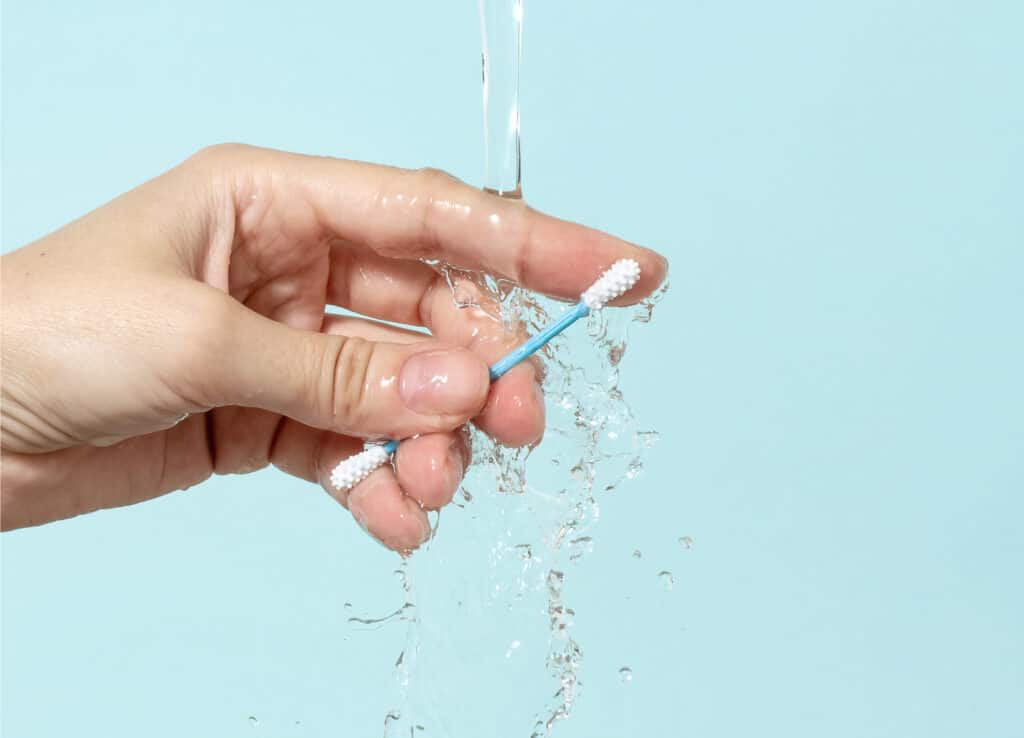
Products and businesses promoting the circular economy model
SOLIDWOOL
What’s so special? Solidwool is a hard, composite material that combines wool, a byproduct of UK sheep farming, with bioresins made from wood pulp and other renewable industrial waste streams. Hembury chairs contain dark grey wool from Lake District Herdwick sheep, while the more marbled Welsh Mountain wool comes from a hardy sheep bred in the Welsh hills.
Solidwool provides a niche sustainable alternative to mainstream petrochemical-based plastic composites. Ash legs are sourced in the UK and hand-turned in Somerset, with recycled steel frames made in Peterborough.
Who uses them? Interior design lovers with a passion for natural materials with texture and provenance.
Where to buy? Solidwool furniture can be viewed in Roger Oates showrooms in London and Herefordshire, or online.
KERACOL
What’s so special? In his state-of-the-art green chemistry lab at the University of Leeds, scientist Richard Blackburn is developing formulas for cosmetics, haircare and skincare products using food waste ingredients.
The products are created using an energy-efficient and toxic-free extraction process.
Richard designs cleansers using dried leftover peel from China’s favourite fruit, body care products made with grape skin extracts or hair toners made with leftover blackcurrant skins from Japanese drink manufacturer of Ribena.
In the case of mandarins, 10 million tonnes of peel get incinerated every year. The processes he uses makes the remaining peel biodegradable, so it’s a win-win, especially with products that end up being washed down the plughole.
Who uses them? Zero-waste enthusiasts wanting to maximise untapped resources.
Where to buy? New brands will be launched later this year.
MOGU
What’s so special? Italian designers at Mogu create colourful acoustic tiles, wall panels and floor coverings using mushroom technology. Various strains of mycelium (a network of fungal threads) are grown on waste organic matter, then coated in a bio-based resin.
The resulting plastic-free matrix is slowly dried (for reduced energy consumption) to create a versatile, toxic-free and biodegradable composite material. Available in six colours, industrial pigments have been replaced with the likes of spent coffee grounds, discarded seaweed and clamshells.
Who uses them? Great for offices, hotels, restaurants and homes.
Where to buy? Online.
BILLY TANNERY
What’s so special? Softer than cow leather, with beauty in every imperfection, Billy Tannery’s luxury goat leather products are crafted in small batches with an artisan tanning process from Jack Millington’s workshop in the Midlands. Until he co-founded his tannery – the first of its kind to be built in this country for more than 50 years – billy goats were an unwanted by-product of the dairy industry and most of their hides were incinerated.
Now, in collaboration with Cabrito Goat Meat, a company that sells sustainably sourced goat meat, these animals are farmed with more purpose and a nose- to-tail philosophy. World experts in sustainable leather production and tannery effluent have been consulted to develop a process that’s as closed-loop as possible.
At the microtannery, the goat hides undergo a toxic-free vegetable tanning process and using natural bark extracts makes it easier to treat the wastewater and produce biodegradable waste products that can either be composted or used to fertilise.
Who uses them? Professionals keen to bring finesse and a country edge to city living with sophisticated bags, wallets, laptop cases, boots, branded aprons plus menu covers for the hospitality trade.
Where to buy? Online.
Anna Turns is an environmental journalist, broadcaster and author of Go Toxic Free:
Easy and Sustainable Ways to Reduce Chemical Pollution (£14.99, Michael O’Mara Books).